Microsegmentation vs network segmentation
Microsegmentation and network segmentation both divide a network to control traffic, but they operate at different levels of granularity and at different enforcement points.
Microsegmentation and network segmentation both divide a network to control traffic, but they operate at different levels of granularity and at different enforcement points.
| Attribute | Network segmentation | Microsegmentation |
|---|---|---|
| Granularity | Broad network zones based on department, function, or location | Individual workloads and/or applications |
| Enforcement point | Network boundaries (firewalls, VLANs, VRFs) | The individual workload (for example, host-based firewall) |
| Typical use case | Controlling traffic between large network areas | Limiting east-west lateral movement between workloads |
| Operational complexity | Lower; fewer, broader policies | Higher; granular per-workload policy lifecycle management |
For the broader concept and its implementation methods, see the network segmentation page.
Microsegmentation secures applications by expressly allowing particular application traffic and, by default, denying all other traffic. Microsegmentation is the foundation for implementing a zero-trust security model for application workloads in the data center and cloud. This allow-list, default-deny model aligns with the zero-trust principles defined in NIST SP 800-207, Zero Trust Architecture.
Microsegmentation is the implementation of granular firewall policy controls using the host workload firewall as the enforcement point across any workload type (virtual machines, bare metal servers, containers). Policy lifecycle management is the most challenging part of implementing an effective microsegmentation policy that adapts to support changes to your applications and your business. You begin at the macro level and continually refine through policy automation, leveraging application and workload context and behavior.
To understand how organizations are addressing these challenges today, see the Results from Cisco's 2026 Segmentation Survey.
Microsegmentation is implemented as granular firewall policies at the application workload level. Granular east-west policy control provides a scalable way to create a secure perimeter zone around each workload with consistency across different workload types and environments. This enhances and extends the visibility and control from network or zone-based firewalls.
As organizations virtualize their on-premises data centers and adopt cloud environments, their network perimeters vanish and attack surfaces increase. Workloads, automation, and API-based attacks become new threat vectors. microsegmentation uses an allow-list model to significantly reduce this attack surface across different workload types and environments.
microsegmentation helps you gain better threat visibility and enforcement for critical workloads and applications across different platforms and environments, limiting lateral movement of a security incident from one compromised VM, service, or container to another.
microsegmentation allows for better security and ensures compliance for applications with regulatory mandates. Granular visibility and control over sensitive workloads demonstrate proper security and data separation to simplify audits and document compliance.
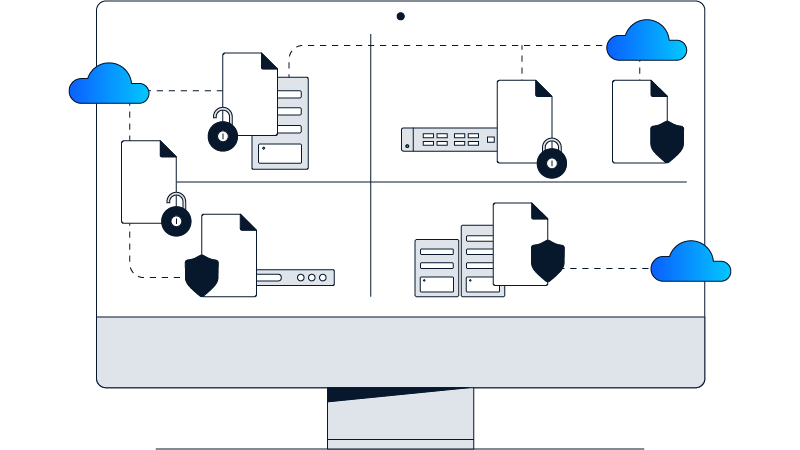
Microsegmentation creates secure zones across cloud and data center environments to isolate application workloads and secure them individually. It applies firewall policies at the workload level to limit east-west traffic, based on a zero-trust approach. It is also called application segmentation or east-west segmentation.
Network segmentation divides a network into broad zones at the network boundary, while microsegmentation applies access control at the individual workload. Microsegmentation offers finer granularity and is highly effective at limiting east-west lateral movement between workloads.
Microsegmentation enforces an allow-list, default-deny model at the workload, granting only explicitly permitted traffic. This least-privilege approach is a core enforcement mechanism for Zero Trust, aligning with the principles in NIST SP 800-207.
Microsegmentation reduces the attack surface, protects critical applications by limiting lateral movement, and strengthens regulatory compliance through granular visibility and control over sensitive workloads. This makes audits easier to document and supports data-separation requirements.
The most common challenge is policy lifecycle management, because granular per-workload policies must adapt as applications and the business change. Organizations typically begin at the macro level and refine through policy automation that leverages application and workload context.