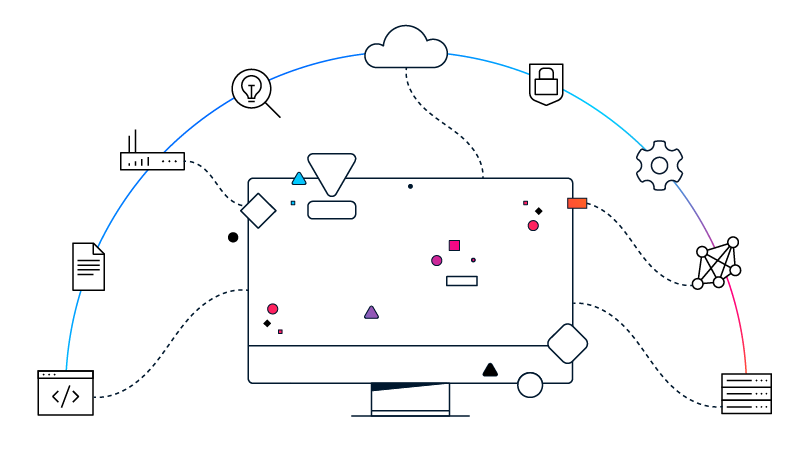
Key CloudOps agility principles
Developmental agility allows companies to rapidly develop, test, and then deploy software to drive business growth. The monitoring and management of cloud resources creates operational agility that enables enterprises to quickly respond to changing business needs.
To support this agility, enterprises should consider platforms that support the following principles:
Anywhere access
Anywhere access is the provision that users have access to enterprise cloud services from any location and from different devices, such as a mobile, tablet, or desktop. This feature may extend beyond employees to other constituents of the access model, such as customers and suppliers.
On-demand self-service
Self-service is the provision that cloud resources can be utilized, expanded or contracted, on demand, to meet operational needs. Self-service features offer control of on-demand cloud resources typically through online control panels.
Consistent policy
Policies, which help document internal and security controls, are critical for organizations to help ensure their cloud integrity and privacy. Management of cloud policies helps to ensure cloud resources are supporting business goals while complying with external compliance requirements if needed.
Common data telemetry
Cloud telemetry allows IT teams to access and analyze data from devices across clouds. By analyzing common data telemetry sources, such as logs, metrics, events and network traces, it becomes possible to easily determine the health of applications and the cloud network they run on.
Policy automation
A policy automation defines the conditions to be met before an action is triggered. It typically layers complex business logic over operational IT. Even further, policy automation enables enterprises to quickly respond to changes in policies and implement those changes throughout the organization quickly.
Application Programming Interface (APIs)
APIs allow two disparate systems to easily communicate without needing to expose their inner logic to each other. A common interface allows for easy and consistent interoperability between systems that can undergo constant code updates. In the cloud, this means cloud infrastructure can continuously improve underneath a common interface that users do not need to relearn or adjust their applications to work with as updates are rolled out.
Visibility
From a resource and cost standpoint, visibility into cloud performance and resource usage is a key advantage of cloud operations. Metered services are able to catalog exact resource usage on a monthly, even hourly, basis—ideal for companies whose needs fluctuate, like with seasonal demand.
These underlying principles can increase agility while improving controls over the whole system by tightly monitoring devices and policies and favoring transparent and independent systems.